Battery Management Systems (BMS) in Hybrid Inverters
If you’ve heard about hybrid inverters in Pakistan, you probably know they’re popular for helping people save on energy costs and get reliable backup power. But behind these smart systems is something that ensures everything runs smoothly: the Battery Management System or BMS.
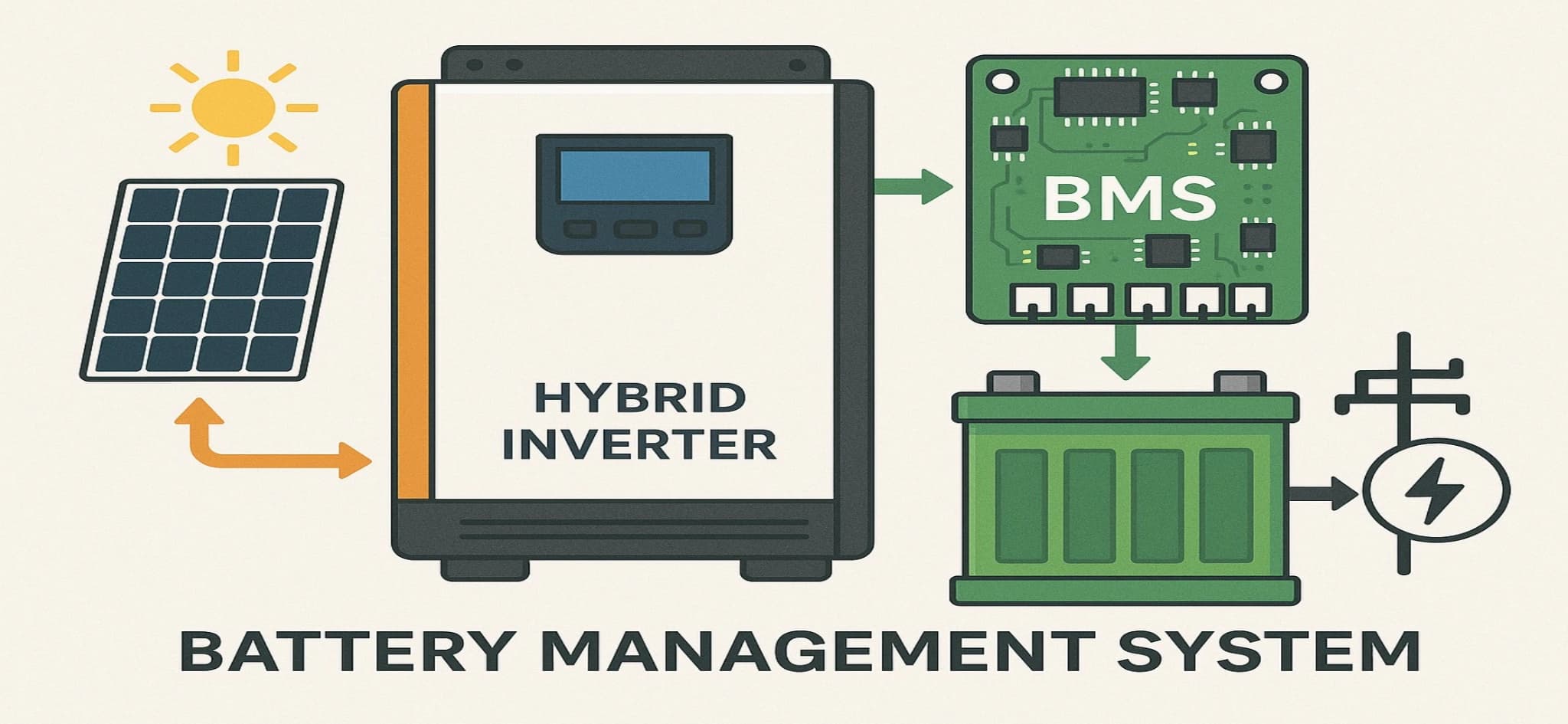
Think of the BMS as the "brain" of the battery. It makes sure your hybrid inverter’s battery is safe, efficient, and works for a long time. In this article, we’ll explain what BMS is, how it works, and why it's so important, especially for those using solar energy and backup power systems in Pakistan.
What is a Battery Management System (BMS)?
A Battery Management System (BMS) is like the "guardian" of your battery. It monitors and controls how the battery is charged and discharged, making sure it doesn’t get overcharged or run out of power too quickly. A BMS also keeps the battery at a safe temperature and helps it last longer by balancing the energy across its cells.
Hybrid inverters use these batteries to store energy from sources like solar panels or the grid, and the BMS makes sure the battery is used efficiently. Without the BMS, your battery could get damaged or perform poorly, and you’d end up losing money on repairs or replacements.
Why is the BMS Important in Hybrid Inverters?
In Pakistan, where power cuts are common, hybrid inverters offer a great way to store energy for when the grid goes down. But, to get the most out of your inverter and battery, you need a BMS. Here’s why:
The BMS keeps track of things like voltage and temperature. If the battery gets too hot or overcharged, it can get damaged or even catch fire. The BMS prevents this by shutting down the system if things go wrong.
2. Maximizes Battery LifeIn Pakistan’s heat, batteries can wear out quickly. But the BMS ensures your battery is charged and discharged properly, so it lasts longer—helping you get the best value for your money.
3. Prevents Overcharging & Deep DischargeOvercharging or draining a battery too much can damage it. The BMS ensures this doesn’t happen. It automatically cuts off power when the battery is fully charged or almost empty.
4. Keeps the Battery BalancedIn a hybrid system, the battery is made up of many cells. If one cell gets weaker than the others, the battery won’t work well. The BMS balances these cells, making sure they’re all working equally, which keeps the system efficient.
How Does the BMS Work?
Here’s a simplified breakdown of what the BMS does in a hybrid inverter system:
The BMS keeps an eye on the health of the battery, letting you know how much charge is left (called SOC – State of Charge) and how healthy the battery is (SOH – State of Health). This helps you know when the battery might need to be replaced.
2. Regulates Charging & DischargingThe BMS makes sure the battery is charged properly. For example, if your hybrid inverter is charging the battery, the BMS will stop charging once it's full to prevent overcharging. Similarly, it ensures that the battery isn’t discharged too much when powering your home.
3. Protects Against Overcurrent & OvervoltageIf something goes wrong—like if there’s a sudden surge in power—the BMS will cut the power to protect the battery. This helps prevent damage from overvoltage or overcurrent situations.
4. Keeps the Battery CoolIn Pakistan’s hot climate, keeping batteries at the right temperature is crucial. The BMS checks the temperature of the battery, and if it gets too hot, it will shut down or trigger cooling systems to protect the battery from overheating.
Why Is BMS Especially Important in Pakistan?
Power outages and high temperatures are common in Pakistan, especially during the summer months. Here’s how the BMS helps in such situations:
Solar energy is becoming increasingly popular in Pakistan due to frequent power cuts and the rising cost of electricity. Hybrid inverters with batteries allow you to store the energy generated by solar panels during the day for use at night. The BMS ensures the battery is used effectively, preventing wastage and damage.
2. Hot WeatherThe intense heat in Pakistan can cause batteries to degrade faster if not managed properly. BMS systems are designed to prevent this, ensuring that the battery stays at the right temperature and lasts longer, even in high heat.
3. Maximizing Backup PoweIn areas where the grid fails frequently, a hybrid inverter with a BMS ensures that the battery is always ready for use. It knows when to charge and discharge, so you have a constant supply of power even when the lights go out.
Challenges of BMS in Hybrid Inverters in Pakistan
While the BMS plays a huge role in making hybrid inverters efficient and safe, there are some challenges in Pakistan:
- High Initial Costs: While the BMS adds value, the cost of hybrid inverters with advanced battery management systems can be higher than traditional systems.
- Climate Variability: Extreme weather conditions (heatwaves, humidity) in Pakistan can stress the BMS, requiring regular maintenance.
- Battery Lifespan: Pakistan’s inconsistent power supply and fluctuations in voltage can impact the lifespan of batteries, even with a BMS.
Conclusion: BMS in Hybrid Inverters – A Must-Have for Safe & Efficient Energy Storage
If you’re looking to install a hybrid inverter system in Pakistan—whether for solar energy storage or backup power—a Battery Management System (BMS) is essential. It keeps your battery safe, prolongs its life, and makes sure you always have reliable power when you need it most. While there are some initial costs involved, the benefits of having a BMS are clear. It’s the smart way to ensure that your hybrid inverter system runs smoothly and safely, especially in Pakistan's challenging climate and power conditions.