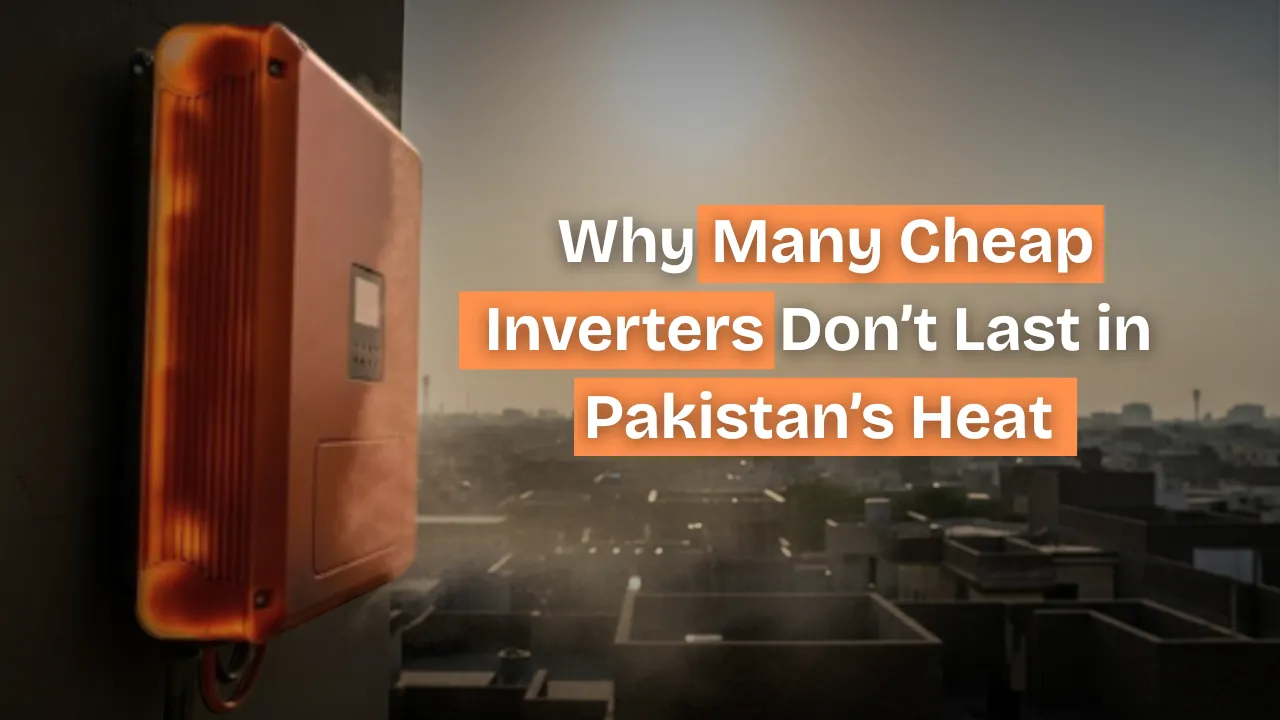
As the demand for solar power continues to grow across Pakistan, many homeowners and businesses are shifting to solar as a long-term solution to high electricity costs and shortages. While this trend is positive, one critical factor often overlooked is the quality of the solar inverter.
The Harsh Climate Challenge
Pakistan’s long summers bring extreme heat, with cities like Jacobabad, Multan, and Lahore often hitting 49°C or more. Electronics struggle under these conditions, and cheap inverters—unlike premium models with built-in cooling and protections—frequently fail or degrade quickly.
Key Reasons Cheap Inverters Fail in Heat
1. Poor Heat Management
Premium inverters feature cooling fans, heat sinks, and thermal controls. Cheap models often skip these, leading to overheating, performance drops, and failure.
2. Substandard Components
Budget inverters typically use low-grade wiring and circuit boards. Under sustained heat, these parts deform, short-circuit, or burn out prematurely.
3. No Overload or Thermal Protection
High-quality inverters shut down or reduce output if they overheat. Low-cost versions usually lack this safeguard, which accelerates damage.
4. Not Designed for Local Conditions
Many cheap imports are not tested for Pakistan’s climate. While they may work in cooler regions, they quickly fail in extreme heat.
Warning Signs of a Failing Inverter
- Frequent shutdowns during peak heat
- Excessive surface temperature
- Unexpected drops in system performance
- Strange noises or error codes
- Swollen or damaged components on inspection
Risks of Using a Cheap Inverter
- Reduced lifespan of solar batteries
- Electrical fire or short-circuit risk
- Unstable or reduced power output
- Damage to household appliances
- Increased repair and replacement costs
Choosing the Right Inverter for Local Conditions
When buying an inverter in Pakistan, especially in hotter areas, look for:
- Thermal protection features
- Built-in cooling systems
- IP65/IP66 dust & moisture resistance
- High ambient temperature tolerance (49°C+)
- Warranty and strong local after-sales support
Though more expensive upfront, reliable inverters provide long-term savings, stable performance, and safety in Pakistan’s harsh climate. Choosing wisely ensures your solar investment truly pays off.