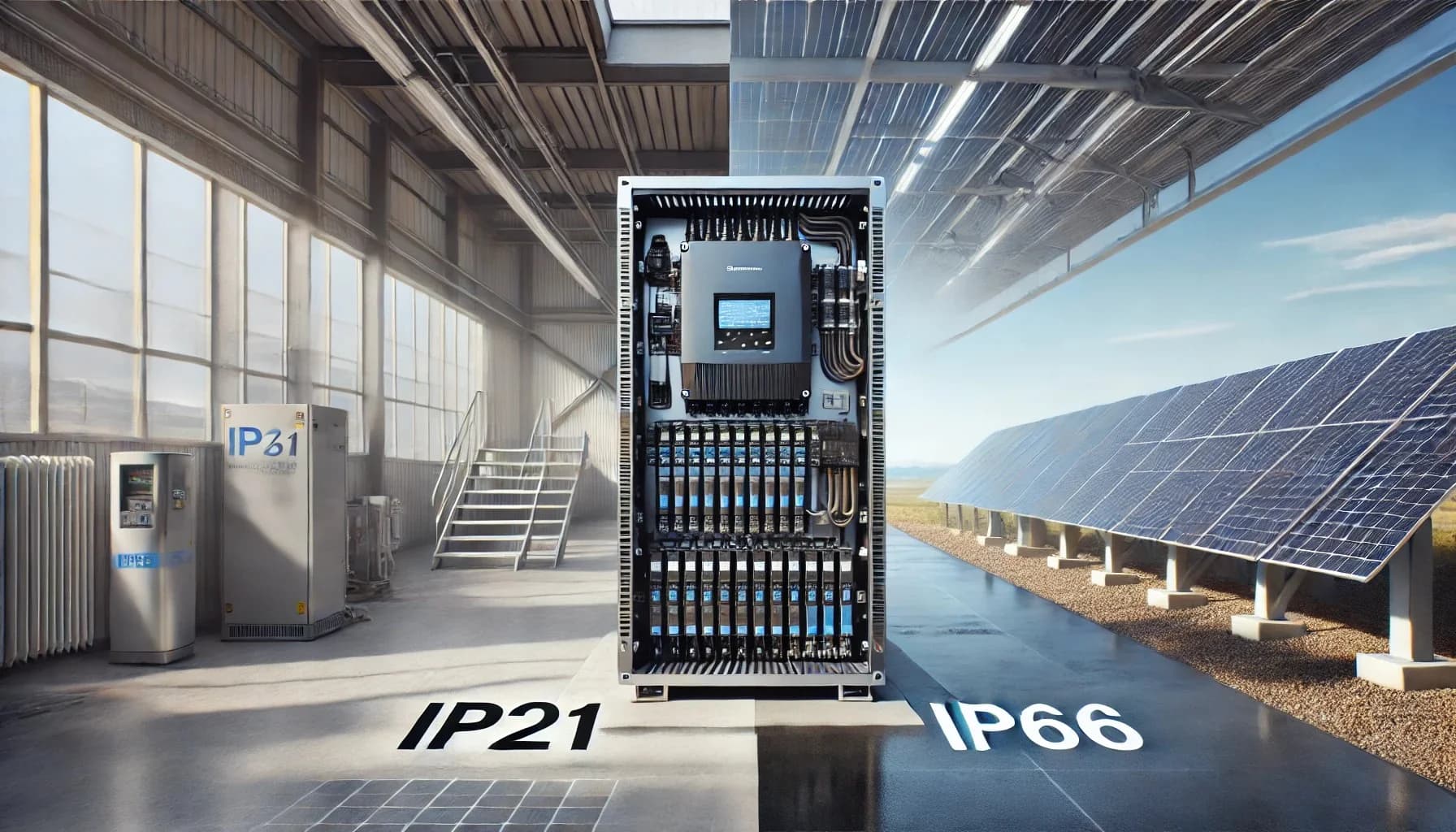
What Are IP Ratings?
The IP rating consists of two digits:
- First digit (0-6): Represents protection against solids (e.g., dust, tools, or objects).
- Second digit (0-8): Indicates protection against liquids (e.g., water, rain, or moisture).
IP21 Inverters: Characteristics and Best Uses
Protection
- Solid Protection (2): Provides protection against solid objects greater than 12.5mm, such as fingers or small tools.
- Second digit (0-8): Indicates protection against liquids (e.g., water, rain, or moisture).
Best For:
- Indoor Applications: IP21 inverters are best used in dry, indoor environments. They are ideal for spaces like residential homes, offices, or commercial buildings that have controlled temperature and humidity.
- Low-Risk Environments: Suitable for areas where exposure to dust and water is minimal, and where the inverter is kept away from direct moisture or splashes. If you are installing solar panels indoors or in dry climates, IP21 inverters can be a good choice.
Lifespan and Durability
- Lifespan: IP21 inverters typically have a shorter lifespan compared to more robust models (like IP66) because they are more vulnerable to environmental factors such as humidity, dust, or splashes.
- Durability: These inverters are not designed for harsh conditions. High humidity or exposure to rain or dust can damage the internal components, reducing the efficiency and lifespan of your solar power system.
Maintenance
- High Maintenance: These inverters need frequent monitoring and maintenance. If deployed in environments with dust or high humidity, additional casing or protection may be required.
- Vulnerability: They need to be regularly inspected to avoid damage caused by moisture or debris, particularly when paired with best solar panels that require stable conditions to perform efficiently.
Pros:
- Affordable and cost-effective for indoor, controlled environments.
- Easier to install and maintain in dry conditions.
Cons:
- Not suitable for outdoor or wet conditions.
- Limited protection against dust or water exposure, potentially shortening the life of your solar energy system.
IP66 Inverters: Enhanced Protection for Harsh Conditions
Protection
- Solid Protection (6): Fully dustproof. No dust can enter the inverter, making it highly resistant to dust and particles, which is crucial for harsh or industrial environments.
- Liquid Protection (5): Protection against water jets from any direction. The inverter can withstand heavy rain or water splashes, but not submersion.
Best For:
- Outdoor Applications: IP66 inverters are ideal for outdoor solar power systems, especially for solar panel installations on rooftops, commercial buildings, farms, or industrial sites exposed to various weather conditions.
- Dusty or Wet Environments: Perfect for areas prone to dust, moisture, or rain, such as construction sites, agricultural facilities, or regions with high humidity.
Lifespan and Durability
- Lifespan: IP66 inverters are designed to last longer than IP21 models, as they are built to withstand harsh environmental conditions. With proper installation and maintenance, they can have a much longer operational lifespan, ensuring the longevity of your solar energy system.
- Durability: These inverters are highly resistant to environmental damage and perform well in all weather conditions, including heavy rain, dust, and moderate water exposure, ensuring the performance of solar panels even in challenging climates.
Maintenance
- Low Maintenance: IP66 inverters generally require less maintenance due to their sealed construction. Their robust design ensures they operate reliably even in tough conditions, offering less downtime compared to IP21 models.
- Reliability: With better protection against the elements, IP66 inverters experience fewer failures or repairs, helping to reduce the maintenance costs of solar power systems.
Pros:
- High durability and long lifespan in outdoor or harsh environments.
- Low maintenance due to strong protection against dust and water.
- Better protection from environmental hazards like rain, dust, and wind.
Cons:
- More expensive than IP21 models.
- Requires some ventilation in extreme climates to prevent overheating.
Key Differences: IP21 vs IP66 Inverters
| Feature | IP21 | IP66 |
|---|---|---|
| Dust Protection | Limited (can allow dust entry) | Full (dustproof) |
| Water Resistance | Minimal (protection against light moisture) | Moderate (protection against water jets) |
| Best For | Indoor use in dry, controlled environments | Outdoor use, rooftops, industrial or agricultural environments |
| Durability | Low (vulnerable to humidity and dust) | Medium (designed for harsh weather conditions) |
| Lifespan | Shorter (vulnerable to environmental factors) | Longer (more resistant to damage from elements) |
| Maintenance | High (requires extra care and monitoring) | Low (durable with minimal care) |
| Cost | Low | Moderate to High |
When to Choose IP21 vs IP66
IP21 Inverters
- Best For: Indoor solar panel setups or environments with minimal exposure to moisture or dust. Ideal for residential solar systems in controlled environments like small farms or greenhouses.
- Usage: Where there is minimal exposure to dust, moisture, or extreme weather conditions.
- Lifespan & Maintenance: Shorter lifespan and higher maintenance requirements, as IP21 inverters are sensitive to changes in temperature and humidity.
IP66 Inverters
- Best For: Outdoor solar power systems, solar panel installations on rooftops, or areas prone to weather exposure. Perfect for industrial solar installations or agricultural solar solutions.
- Usage: Ideal for harsh or changing weather conditions, including heavy rain, dust, and exposure to varying temperatures.
- Lifespan & Maintenance: Longer lifespan and lower maintenance due to superior protection from environmental elements, making it more cost-effective in the long run.
Conclusion
When choosing between IP21 and IP66 inverters, the decision comes down to the environment in which they will be installed. IP21 inverters are affordable and best suited for indoor, controlled spaces, such as residential solar panels. On the other hand, IP66 inverters offer superior protection for outdoor solar power systems, ensuring durability and low maintenance even in harsh weather conditions. For installations in more challenging environments, like rooftops, industrial sites, or farms, IP66 inverters are the better choice to safeguard your solar energy system for the long term.
By understanding these key differences, you can ensure your solar panels, and other components are well-matched to their environment, optimizing performance and ensuring longevity.